- AI-Native Training
- SAFe Training
- Choose a Course
- Public Training Schedule
- SAFe Certifications
- Leading SAFe
- SAFe Scrum Master
- SAFe Product Owner/Product Manager
- SAFe Lean Portfolio Management
- SAFe Release Train Engineer
- Implementing SAFe
- Advanced SAFe Practice Consultant
- SAFe Advanced Scrum Master
- SAFe for Architects
- SAFe for Hardware
- SAFe for Teams
- Agile Product Management
- SAFe DevOps
- SAFe Agile Software Engineering
- Leading SAFe for Government
- SAFe Micro-credentials
- Agile HR Training

How to Choose a SAFe Certification

One of the most common questions we are asked - both prior to and during courses is: How do I know which SAFe training to take? Those who are new to SAFe want to know which one to start with. Those who already have one SAFe Certification want to know which one to take next. Given there are currently 12 SAFe certifications (and 3 Micro-Credentials) provided by Scaled Agile, Inc. this is a valid question!
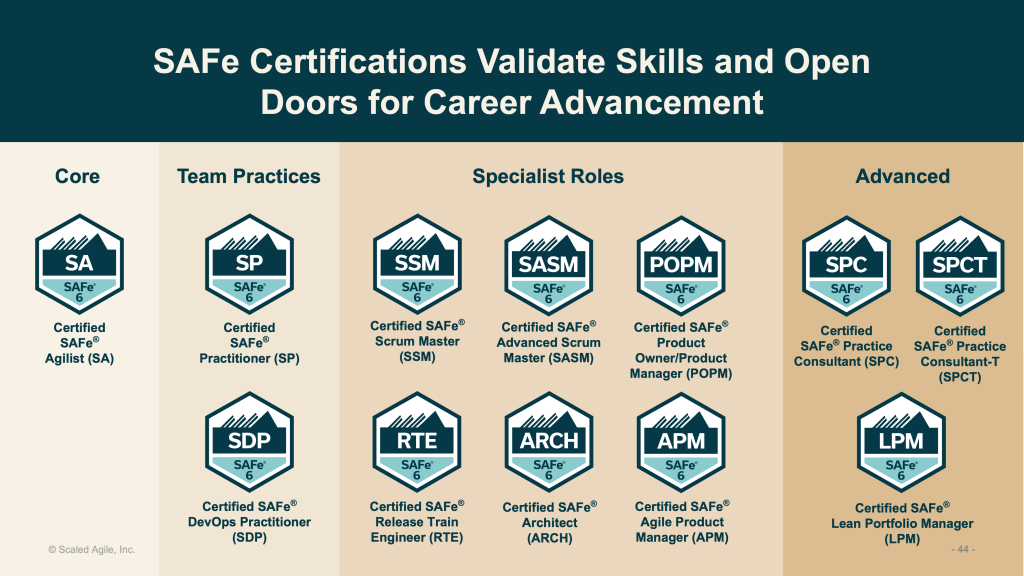
The 12 SAFe® 6.0 Certifications
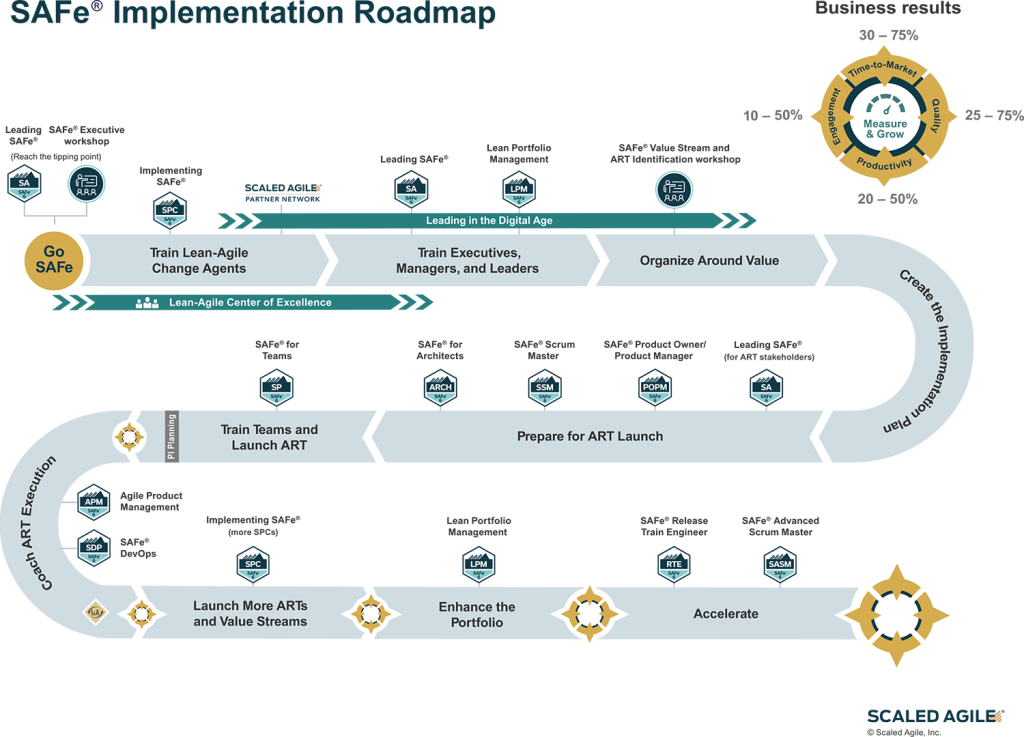
11 of the 12 SAFe certifications are plotted on the SAFe Implementation Roadmap. While this informs where the course fits in the context of implementing SAFe and which classes should be included in an ART Launch, it is less helpful when trying to work out which class an individual should attend.
Most of the SAFe certifications are role-based, which leads some people to think the way to choose a class is to pick the role you have or the role you aspire to and take the appropriate class. While that is certainly one approach, it is not one I would recommend. To get the most out of your investment in training, you should take a considered approach when choosing which class or classes you want to attend.
How do the Scaled Agile Certifications Differ?
Let's explore each of the SAFe certifications in the order they appear on the implementation roadmap.
Leading SAFe with SAFe Agilist (SA) Certification (2-days)
Technically, the target audience for Leading SAFe is people in leadership and management roles. This is the class that is taught to leaders at all levels, from front-line leaders to CEOs in organisations that are already using SAFe and/or exploring adopting SAFe. When launching Agile Release Trains (ARTs), we like every people manager for every person on or impacted by the ART to take this class, along with the ART leadership (Release Train Engineer, Product Management and System Architect) and Shared Services.
However, the Leading SAFe class is also the best class to take to get an introduction to SAFe. I like to think of Leading SAFe as a “crash course” in the Scaled Agile Framework. It provides an overview of the big picture and covers four of the seven core competencies of Business Agility: Lean-Agile Leadership, Team and Technical Agility, Agile Product Delivery and Lean Portfolio Management. This class has the most comprehensive content on the SAFe Principles and includes a PI Planning simulation. Participants will gain a solid understanding of Portfolio SAFe and the "Ten Critical ART Success Factors". The SAFe Agilist certification is also the most popular of all the SAFe certifications.
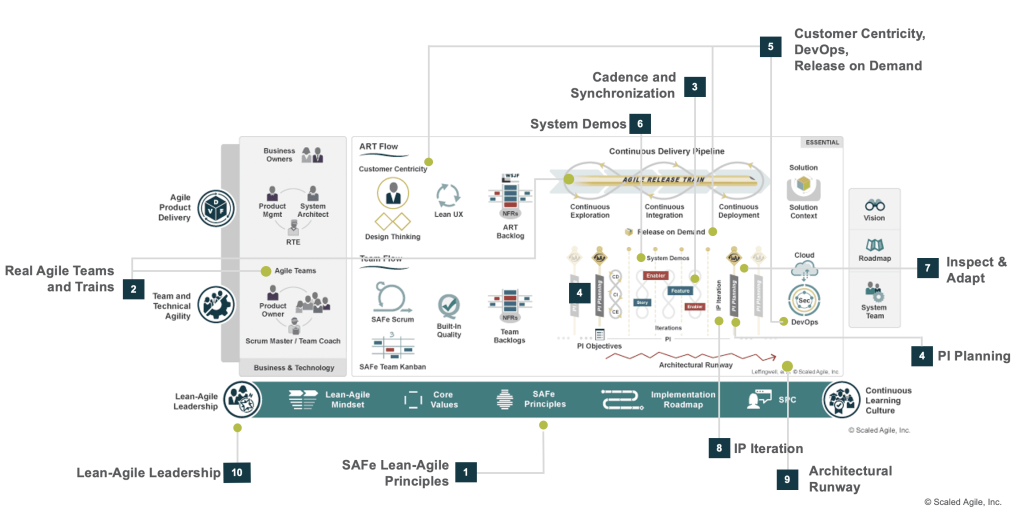
Implementing SAFe with SAFe Practice Consultant (SPC) Certification (4-days)
The most complete class is the 4-day Implementing SAFe class with SPC certification. This is the only class that covers all seven core competencies of Business Agility and the full SAFe Implementation Roadmap. This means if you want to be on the front line helping organisations implement SAFe, this is the course you want to take. This class is also taken by a lot of people who want to train others in SAFe. While the SPC certification is the first step on this journey, experience with applying SAFe and delivering training are also essential ingredients to becoming a successful SAFe Trainer.
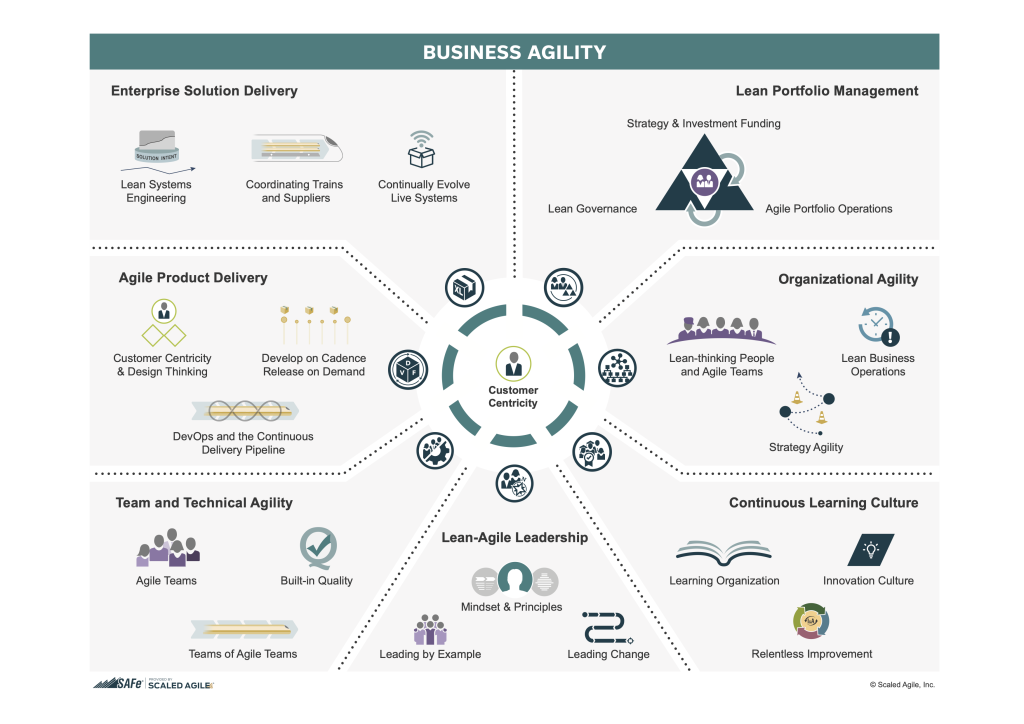
There are a couple of myths about this course that I would like to dispel. Firstly, the inclusion of Leading SAFe as part of the content creates a misconception that attending this class is equivalent to attending a Leading SAFe class. This is not true. When we teach a two-day Leading SAFe class we are focused on introducing participants to SAFe. When we teach the Leading SAFe content in the context of Implementing SAFe, we are focused on helping participants become effective SAFe Practice Consultants, so it is a much deeper and more detailed conversation. This can be overwhelming for those new to SAFe.
The second myth is that Implementing SAFe is only useful for people who want to train others in SAFe. This is incorrect. This class is primarily for those leading and supporting an organisation's journey to implementing SAFe and launching successful Agile Release Trains.
Lean Portfolio Management with SAFe Lean Portfolio Manager (LPM) Certification (2-day course with optional 1-day workshop)
The Lean Portfolio Management course is the only SAFe class that provides a deep dive into the three dimensions of the Lean Portfolio Management core competency. The course is structured as two days of training with an optional one-day Getting Started with LPM Workshop.
This class is primarily attended by PMO and VMO leaders and their team members. Leading SAFe is a highly recommended pre-requisite for SAFe Lean Portfolio Management training as it is assumed knowledge. Participants in this course experience using the full LPM toolset in a simulated context.
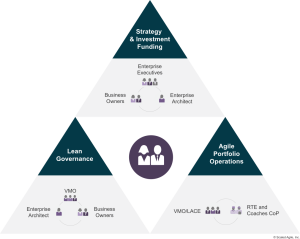
Portfolio Management in SAFe®.
SAFe Product Owner/Product Manager with SAFe POPM Certification (2-days)
The SAFe Product Owner/Product Manager course is role-based training for SAFe Product Owners and SAFe Product Managers. We also find this course to be helpful for other roles that influence requirements such as System Architects, Technical Leads, UX Designers and some Shared Services roles.
This course is 70% Product Owner focused and 30% Product Manager focused. The course covers the role of the Product Owner or Product Manager in planning and executing Planning Intervals and Iterations. Participants experience writing features, stories and acceptance criteria.
Leading SAFe is a highly recommended prerequisite for the SAFe Product Owner/Product Manager course. While it is not mandatory, it is important to understand that the POPM class does not include deep dives on the Lean-Agile Mindset, SAFe Principles or PI Planning.
SAFe Scrum Master with SAFe Scrum Master (SSM) Certification (2-days)
The SAFe Scrum Master course is intended to help new, existing, and aspiring Scrum Masters prepare for the role of Scrum Master on an Agile Release Train within an organisation using SAFe. It provides an introduction to Scrum and Agile and how Scrum fits into SAFe, then deep dives into the coaching role of the SAFe Scrum Master. Participants get to experience PI Planning, as well as planning and executing an iteration. The class also covers all the Scrum and SAFe events that a SAFe Scrum Master facilitates.
I am a Certified Scrum Master (CSM) do I still need to do SAFe Scrum Master?
This class is not the same as the Certified Scrum Master (CSM) certification, or at least is very different from the CSM I took from Mike Cohn back in 2014! The focus of a CSM course is how to do scrum well; the focus of the SAFe Scrum Master class is how to be a servant leader and support a team executing Scrum in the context of SAFe.
SAFe for Architects with SAFe Architect (ARCH) Certification (3-days)
SAFe for Architects is role-based training for all of the SAFe architect roles - System Architect, Solution Architect or Enterprise Architect. It is recommended that participants have attended at least one SAFe course prior to attending this class. We recommend Leading SAFe. The SAFe for Architects course explores the SAFe architect role within every facet of the framework, from steering the portfolio to working with agile teams.
While it is one of the classes listed in the "Prepare for ART Launch" section of the implementation roadmap, in practice, most architects will take this class after they have participated in an ART Launch as Leading SAFe and SAFe Product Owner/Product Manager provide enough education to get started.
SAFe for Teams with SAFe Practitioner (SP) Certification (2-days)
SAFe for Teams is intended to prepare all members of an Agile Release Train for their role in an Agile team on an Agile Release Train. This class is primarily used as part of launching an Agile Release Train. Once the ART is up and running, new team members who are also new to SAFe should take this class.
This course provides an introduction to SAFe and Agile and an understanding of the roles on an Agile team and an Agile Release Train. Students get to experience breaking down features into user stories with acceptance criteria, estimating backlogs and participating in PI Planning. The class also teaches participants about the Scrum and SAFe events that SAFe Agile Teams participate in.
Agile Product Management with SAFe Agile Product Manager (APM) Certification (3-days)
Agile Product Management is designed for Product Managers. It is recommended that participants have attended at least one SAFe course. This course is not overly SAFe specific, so we recommend Leading SAFe and SAFe Product Manager/Product Owner as prerequisites for those working with SAFe. This course is 70% focused on the role of the Product Manager and 30% focused on the role of the Product Owner.
This class has a large focus on the Customer Centricity and Design Thinking dimension of the Agile Product Delivery competency, as well as the Continuous Exploration component of the Continuous Delivery Pipeline. The SAFe POPM certification has a greater focus on the Develop on Cadence, Release on Demand dimension.
SAFe DevOps with SAFe DevOps Practitioner (SDP) Certification (2-days)
The SAFe DevOps course is, in many ways, more a workshop than a training course. It works best when a group of people from the same organisation attend together. Participants start by value stream mapping their current development process, and then over the remainder of the class, they identify opportunities to improve both cycle time and quality based on the content in the course.
This class is suitable for all members of an Agile Release Train and works best when attended by cross-functional teams. We often use this course before an ART launch to create a shared understanding of the current way of working, identify opportunities to improve and define the backlog for the System Team. This is also a great follow-up class for those with existing SAFe training who want to bring focus to their relentless improvement efforts.
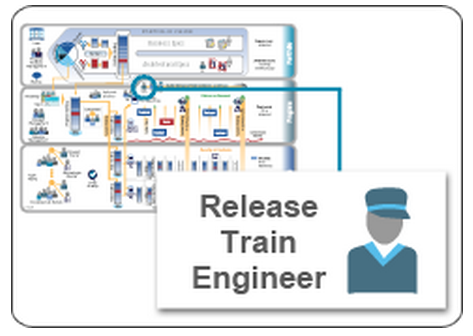
SAFe Release Train Engineer with RTE Certification (3-days)
SAFe Release Train Engineer is designed for existing RTEs and existing SAFe Scrum Masters to “level up”. The class assumes the participants have been working in a SAFe environment for at least one Planning Inteval and have completed at least one SAFe certification, we recommend Leading SAFe.
The class explores the role of the RTE in every aspect of operating an Agile Release Train. The format is quite different to most other SAFe classes as it is more of a workshop. The participants will learn as much from other participants as they will from the courseware and the instructor.
We are often asked why this class is not earlier on the Implementation Roadmap. While I cannot speak for Scaled Agile, Inc., when we launch Agile Release Trains, the RTE attends - Leading SAFe, SAFe Product Owner/Product Manager, SAFe Scrum Master and SAFe for Teams - in the approximately 8 weeks leading up to the ART launch. This, in addition to coaching before and during the first couple of Planning Intervals, feels like enough upfront education.
SAFe Advanced Scrum Masters with SASM Certification (2-days)
The SAFe Advanced Scrum Master course is designed for people with an existing Scrum Master certification to "level up". We recommend attendees have either taken SAFe Scrum Master or have experience with SAFe before taking this class.
For more information on the difference between this class and the SAFe Scrum Master class, check out Demystifying SAFe Scrum Master Certifications.
Scaled Agile has decided to retire this course, so it has not been updated to SAFe 6.0. However, completing the SAFe 5.1 SAFe Advanced Scrum Master class before it is retired and the SAFe 6.0 upgrade will result in you being issued with the SASM 6.0 certification badge.
In October 2024, this course was replaced with the Advanced Scrum Master certification path. We will update the Pretty Agile learning pathways with this soon.
Legacy SAFe Certifications
There are two more certifications that Scaled Agile plans to retire and, therefore, were not upgraded to SAFe 6.0. They are SAFe for Government with SAFe Government Practitioner (SGP) Certification and Agile Software Engineering with SAFe Agile Software Engineer (ASE) Certification.
Scaled Agile, In. have indicated they intend to retire SAFe for Government and replace the key content with SAFe Mirco-Credentials. At this stage, Scaled Agile, Inc. has not shared any plans to reimagine the Agile Software Engineering course.
SAFe Practice Consultant-T Certification (SPC-T)
The SAFe Practice Consultant-T certification is the highest level of SAFe certification offered by Scaled Agile, inc. Earning the SPC-T is a multi-year journey. The certification is only available to SPCs who are full-time employees of Scaled Agile Gold partners or enterprises with a SAFe Enterprise subscription.
You can learn more about the SPC-T program’s candidate qualifications, requirements, and process by viewing the SPCT Program Handbook.
Where do the SAFe Mirco-Credentials fit in?
Scaled Agile, Inc. started to release Micro-Credentials to a limited group of Scaled Agile Partners in April 2024. These courses differ from the 2, 4 and 4-day certifications listed above. SAFe Micro-Credentials are approximately two hours of self-paced learning followed by a half-day instructor led session.
Advanced Facilitator: Conflict & Collaboration
The SAFe Conflict & Collaboration micro-credential teaches participants a framework for navigating conflict. It is ideal for Scrum Masters, Product Owners, Technical Leads, RTEs, Product Managers and System Architects.
Advanced Facilitator: Value Stream Mapping
The SAFe Value Stream Mapping micro-credential teaches participants how to facilitate Value Stream Mapping Workshops. It is ideal for Scrum Masters, RTEs and SPCs. We strongly recommend that SPCs complete this micro-credential before trying to deliver SAFe DevOps training.
Achieving Responsible AI with SAFe
The Achieving Responsible AI micro-credential is designed to equip Agile professionals with the skills to implement AI responsibly in their organizations. This micro-credential is suitable for anyone interested in using AI in the workplace.
Where should I start with SAFe Training?
If you are still wondering where to start - there are five SAFe certifications training that do not have SAFe experience or prior SAFe training as a recommended prerequisite: Leading SAFe, SAFe for Government, SAFe Scrum Master, SAFe for Teams, SAFe DevOps and Implementing SAFe. Choosing the right one for you is very much a matter of context, specifically your current role and what you aspire to do.
Of course, for those who “just want to learn about SAFe” or “just want a SAFe certification” to improve their job prospects, the answer is easy - do Leading SAFe.. This is the most popular and widely recognised of all the SAFe certifications. We also recommend Leading SAFe to anyone in a leadership or management role, including project managers, program managers, program directors, portfolio managers, architects, development managers, product managers, test managers etc.
As you may have already gleaned from the above, the SAFe Scrum Master class is a great place for existing or aspiring Scrum Masters to start, and SAFe for Teams is designed to help agile team members new to SAFe get started.
As for SAFe DevOps, if you have no prior SAFe experience or training, then the learning curve is steeper, as the class is definitely set in the context of SAFe. However, this class is a good starting point for those looking to build a business case for SAFe.
What about Implementing SAFe? Can I start there?
While Implementing SAFe does not have SAFe experience or training as a prerequisite, many SAFe Practice Consultant-Ts (the SPC-Ts that teach the Implementing SAFe class) believe that Leading SAFe should be a prerequisite, and I happen to agree! While the two-day Leading SAFe course content is included in the Implementing SAFe class, most people struggle to absorb 4-days of brand-new knowledge. Taking Leading SAFe, or in fact, almost any SAFe training class, prior to Implementing SAFe is a way of priming the brain for this intense learning experience. Bottom line - we don’t recommend Implementing SAFe for beginners to agile or SAFe.
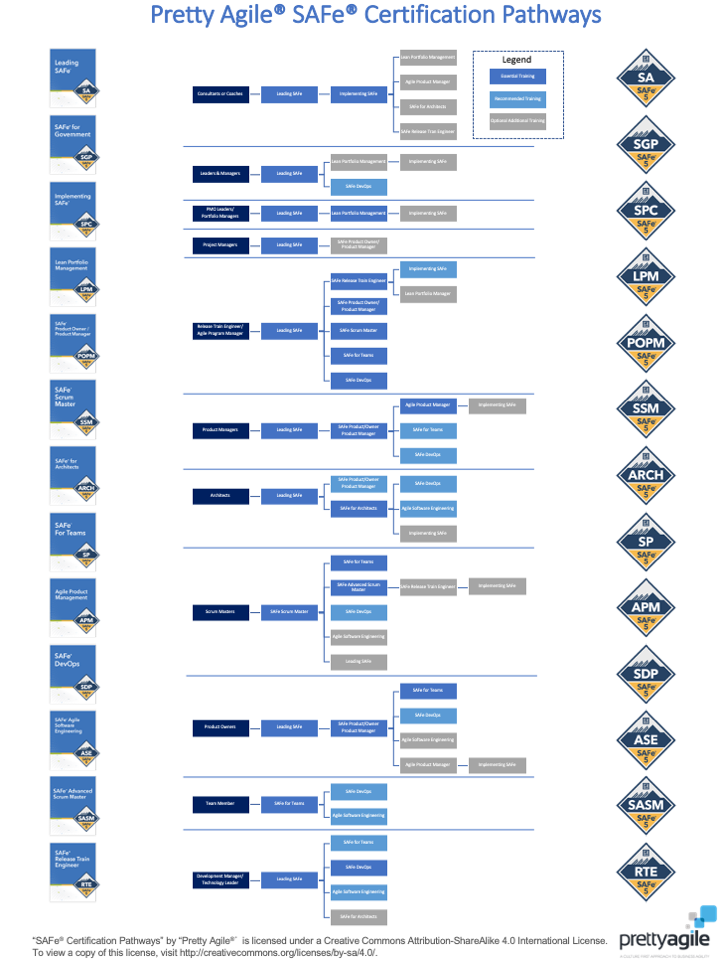
I already have one (or more) SAFe certifications; what class should I take next?
No matter which class you choose to start or continue your SAFe learning journey, I hope you have found this little guide useful. ‘Til next time #StaySAFe.
SAFe 6 Certification Pathways
Download
No matter which class you choose to start or continue your SAFe learning journey, I hope you have found this little guide useful. ‘Til next time #StaySAFe.
Order on Amazon Now!
Get the book from Amazon now!
Categories
Popular Posts