0 Contact

SAFe Certification

Pretty Agile has trained 14,500+ SAFe professionals since 2014, making us Australia's most experienced Scaled Agile Partner. Every course is delivered by SAFe Fellows who are also SPCTs — a distinction capped at 50 practitioners globally by Scaled Agile, Inc. We are the only Scaled Agile partner in the APAC region that offers the full suite of Scaled Agile certifications, including the foundational SAFe Agilist and the in-depth SAFe Practice Consultant (SPC).

If you are looking for training options for SAFe certifications, click on the certification badge you are interested in below or go to our SAFe training courses for the full list of available courses.

Why get a SAFe certification?

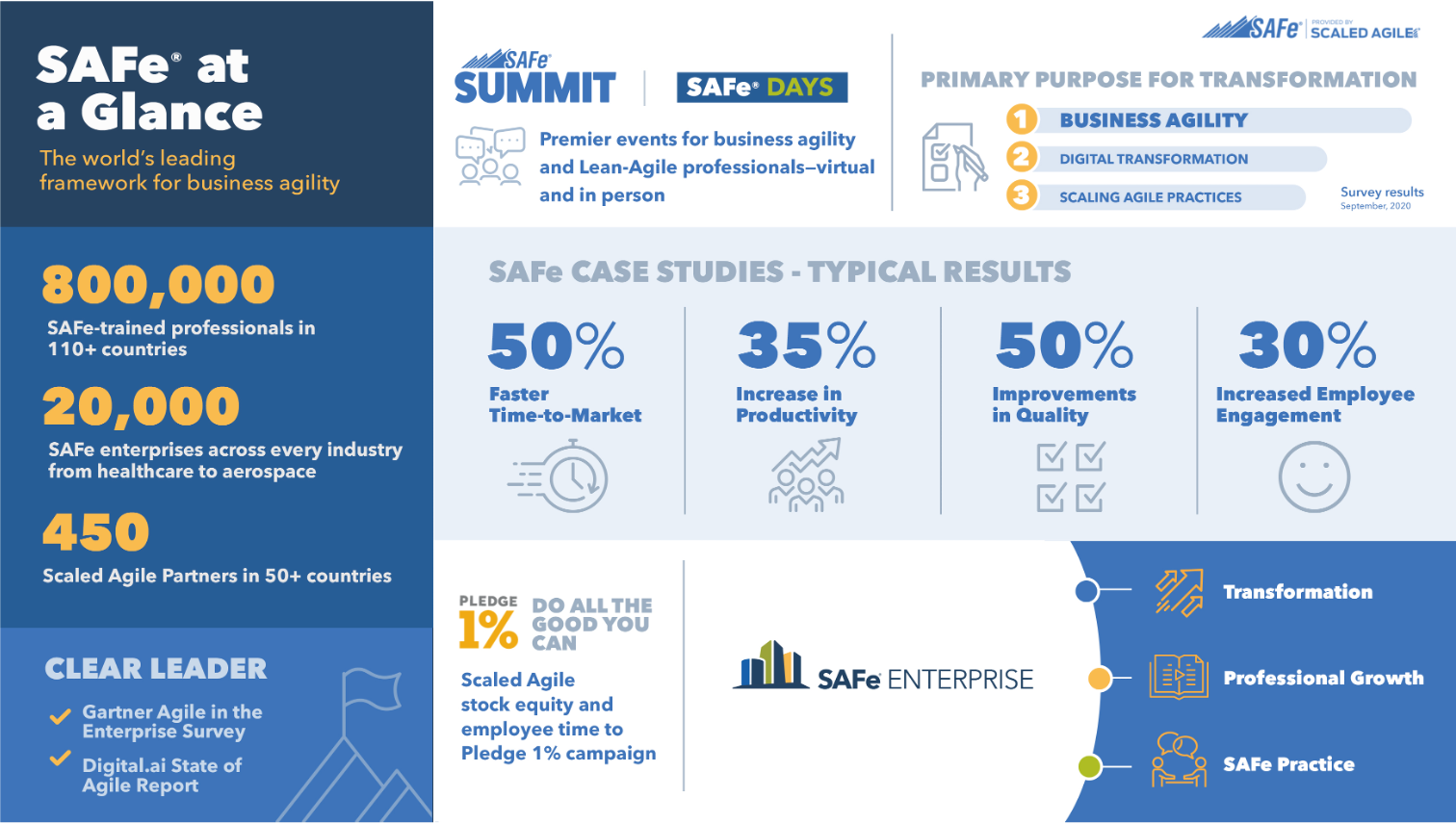
The Scaled Agile Framework is the world's most widely used method for scaling agile. Over 70 per cent of the US Fortune 100 rely on SAFe to coordinate work across teams and programmes.

SAFe certification validates that you have the skills to work effectively inside a SAFe environment. Without it, onboarding into a SAFe organisation takes longer, contribution takes longer, and employers have no objective way to assess your readiness. Certified professionals are sought by organisations that need people who understand how enterprise agility works in practice.

SAFe-certified professionals receive a digital badge via Credly at no additional cost. The badge verifies your active certification and the specific credential you hold.

Not sure which SAFe certification is right for you? Read our guide to choosing a SAFe certification.

Frequently asked questions

Foundational SAFe certifications are designed for practitioners working inside a SAFe organisation. They cover the core roles and practices — including team members, Scrum Masters, Product Owners, and DevOps practitioners — and are the right starting point for most people new to SAFe. No prior SAFe experience is required for most foundational courses.

Advanced SAFe certifications are for experienced practitioners taking on leadership or cross-team roles within a SAFe programme. They include Release Train Engineer (RTE), Lean Portfolio Management (LPM), Agile Product Management (APM), and Advanced Scrum Master (SASM). All recommend a foundational SAFe certification as a prerequisite.

SAFe Expert certifications are for those leading SAFe transformations across an enterprise. The SAFe Practice Consultant (SPC) is for senior practitioners and consultants: it demonstrates the depth of knowledge and coaching capability to drive change at scale, and is the credential most sought by organisations hiring for senior agile and transformation roles. The Advanced SPC (ASPC) builds further on this for experienced coaches and consultants working across multiple organisations or leading large-scale change programmes. These are the most in-depth SAFe credentials available and require significant prior SAFe experience.

Most people start with Leading SAFe, which leads to the SAFe Agilist (SA) certification. It suits anyone working in or alongside a SAFe organisation who wants to understand how the framework operates at an enterprise level. If you are already working in a specific SAFe role, a role-based certification — SSM, POPM, RTE, or LPM — may be more appropriate. Our guide to choosing a SAFe certification covers the options in detail.

A SAFe certification is a credential issued by Scaled Agile, Inc. that demonstrates your ability to apply the Scaled Agile Framework in an enterprise environment. Certifications are role-specific, covering practitioners, Scrum Masters, Product Owners, Release Train Engineers, portfolio managers, and implementation consultants, among others. Each certification requires attendance at an accredited course and passing an online exam.

Yes. SAFe certifications are issued by Scaled Agile, Inc. and recognised globally. Over 70 per cent of the US Fortune 100 employ SAFe-certified professionals. Certifications are delivered as digital badges via Credly, which can be shared on LinkedIn and verified by employers.

SAFe certifications are valid for one year from the date of issue. Renewal requires completing a set number of continuing education hours and paying a renewal fee through SAFe Studio, Scaled Agile's learning platform.

SAFe certifications are role-based credentials tied to specific courses and exams. Micro-credentials are shorter, focused credentials covering a specific skill or topic area within the SAFe ecosystem, such as value stream mapping or responsible AI. Both are issued by Scaled Agile, Inc.

Yes. All Pretty Agile public SAFe courses run online via Zoom, with the same curriculum, trainers, and certification eligibility as in-person classes. Private and corporate courses can be delivered online or in person depending on your organisation's preference. Check the SAFe training schedule for current public dates.

No. Scaled Agile maintains two operating models. Core SAFe (the roles, events, and practices you know) continues to be fully supported, and for many organisations it remains the right operating model, particularly where policies or regulations limit AI adoption. AI-Native SAFe is the second operating model, for organisations ready to build AI into how they work. Core SAFe is also the foundation AI-Native SAFe builds on, so existing SAFe certifications keep their value, and Scaled Agile is providing a free on-demand upgrade path for all certification holders from 25 August 2026.

All Pretty Agile SAFe courses are delivered by SAFe Fellows who are also SPCTs and Certified AI-Native Trainers. The SAFe Fellow distinction is capped at 50 practitioners globally by Scaled Agile, Inc.